


Saddle Pads for Horses and Ponies: How to Choose the Right One
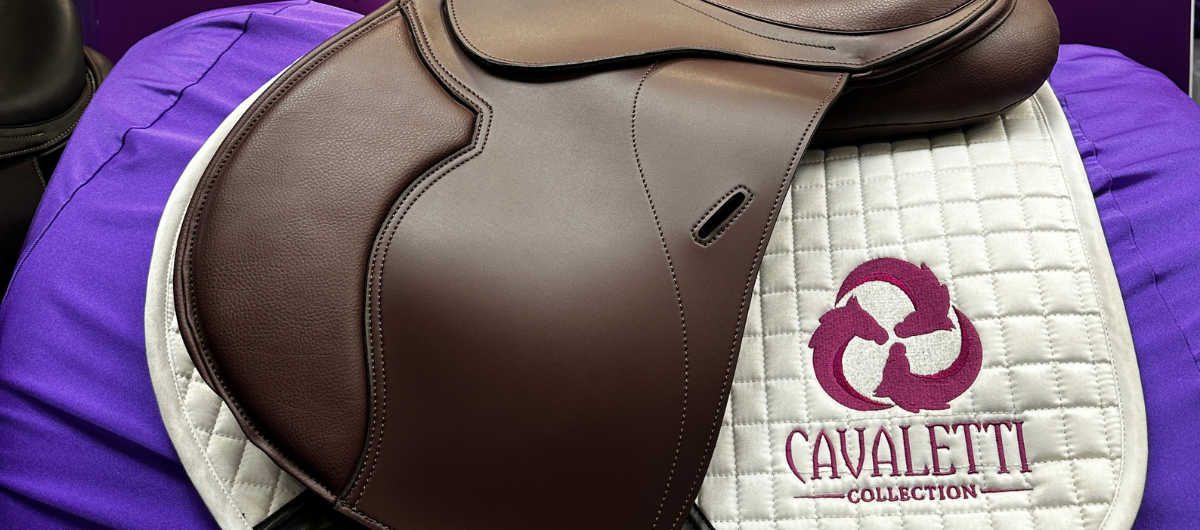
Saddle Pads for Horses and Ponies: How to Choose the Right One
Table of Contents
- Saddle pad versus numnah: what is the difference?
- Saddle pads for ponies: what to look out for
- Jump saddle pads: what matters for jumping
- White saddle pads: practical considerations beyond aesthetics
- How a saddle pad can affect saddle fit
A saddle pad does more than keep the lining clean. For ponies especially, where back shapes vary more than people expect, the wrong pad can undo good saddle fit within a few strides.
It is one of those purchases that feels simple until you are standing in front of a dozen different options, wondering whether thickness matters, whether cut matters, and whether the white one you bought for showing will actually hold up to daily work. Spoiler: the answers depend heavily on your horse and how you ride.
This guide covers the main types of saddle pads, what to look for when buying, and where things can go wrong. If you are shopping for saddles at the same time, getting the pad right matters even more.
Saddle pad versus numnah: what is the difference?
People use these terms interchangeably, but they are not quite the same thing.
A numnah is cut to follow the shape of the saddle. It sits close to the horse's back and is usually secured by loops to the girth straps. It offers minimal padding and is more about protection for the saddle lining than cushioning for the horse.
A saddle pad is typically square or shaped, with more coverage and often more padding. It sits under the saddle and extends beyond the flap. These are more common in everyday schooling and jumping work, where riders want a bit more cushioning and sweat-wicking performance.
Neither is better by default. A well-fitted saddle on a horse with a healthy back may only need a thin numnah. A horse with mild muscle tension or a saddle that is borderline on fit may benefit from a shaped pad that lifts slightly at the wither or spine. The key is that the pad should not compensate for a poorly fitting saddle. More on that below.
Saddle pads for ponies: what to look out for
Buying saddle pads for ponies is not the same as buying a smaller version of a horse pad. Pony backs are proportionally different, and the differences matter.
Ponies tend to have shorter backs, wider barrels, and less wither clearance than horses of similar height. A pad designed for a 16hh warmblood will not lie flat on a 12.2hh native pony. You will get bunching at the front, pressure at the spine, or the pad sitting so far back it provides no coverage at all.
When you are choosing a pony saddle pad, look for:
- A forward girth attachment that suits the shorter distance from the girth line to the wither
- Adequate spine clearance, particularly on wider, flatter-backed ponies
- A shape that does not extend too far down the flank, where it can interfere with movement
- Secure loop attachment to prevent the pad from slipping back during work
For native or cob-type ponies, a pad with a shimming pocket can be genuinely useful, as their back shape often changes with fitness and season. It gives you flexibility without needing a different pad for summer and winter.
If you are also looking at saddle fit for a young or still-growing pony, it is worth using our saddle fitter locator to find professional help. Pony back shapes can shift quickly, and getting the saddle right first makes everything else easier.
Jump saddle pads: what matters for jumping
A jump saddle pad needs to stay in place. That sounds obvious, but it is where a lot of cheaper pads fall short.
When a horse is working over a fence, there is a significant shift in weight and movement through the saddle. A pad that slips back, folds, or bunches under the flap is not just an annoyance. It can create uneven pressure on the horse's back at exactly the moment when the saddle is bearing the most load.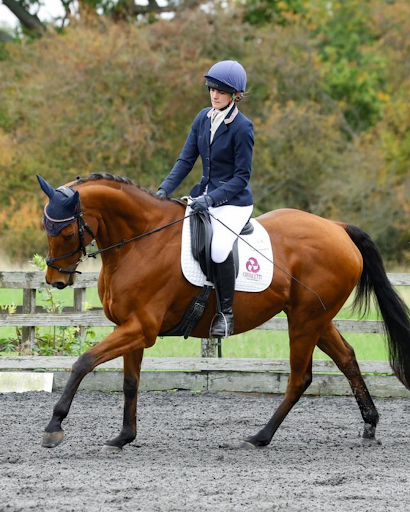
For jumping work, look for:
- A forward-cut shape that matches your jump saddle's flap, so there is no pad showing beyond the flap
- A non-slip backing layer that grips the horse's back without abrading the coat
- Secure girth loop placement, ideally with a double attachment point
- Thinner, denser foam insert rather than thick, soft padding, which can cause the saddle to shift
- Breathable, moisture-wicking fabric on the horse-facing side to manage sweat during harder work
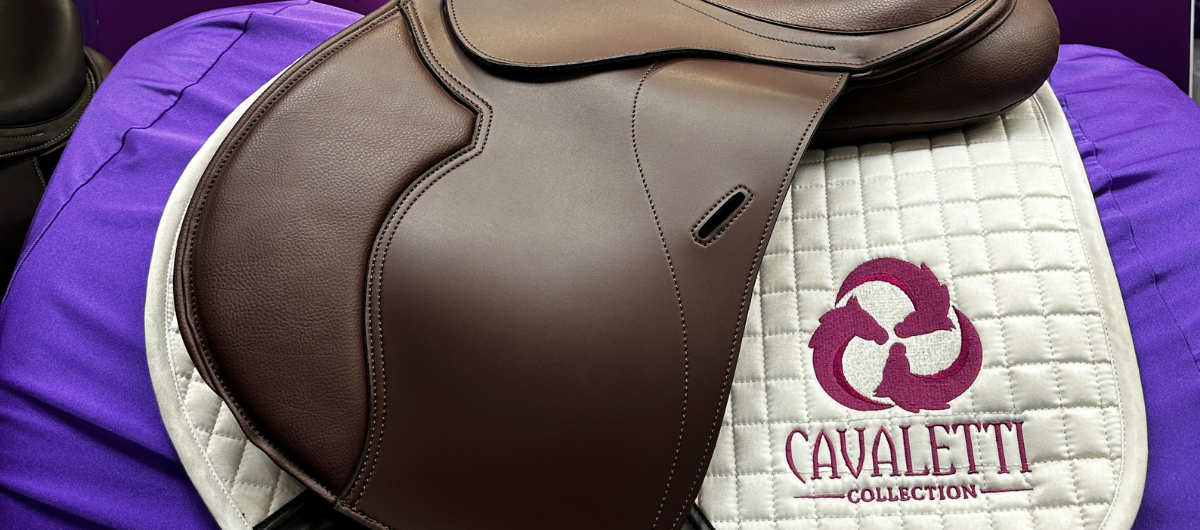
Colour matters less than function for a jump saddle pad. White looks sharp in the ring, but if you are using it for every schooling session, you are adding laundry to your week. Many riders keep a plain black or navy pad for training and save the white for competition, which brings us neatly to the next section.
Image credit: @team_allerton
White saddle pads: practical considerations beyond aesthetics
A white saddlepad is a showing requirement in many disciplines. It signals a turnout standard. It also shows every green stain, every patch of sweat, and every muddy knee-rub in glorious detail.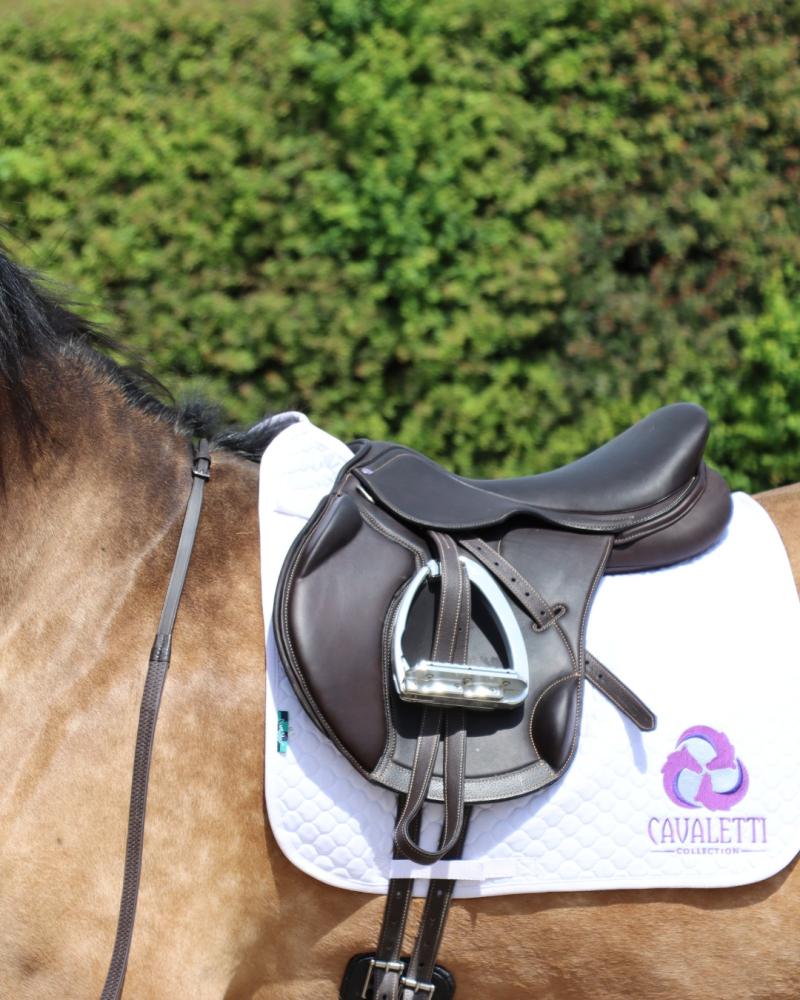
If you are buying a white saddlepad for showing, look at the fabric composition first. A tightly woven cotton or microfibre blend will stay brighter wash after wash than a looser weave. Some pads are treated with a stain-resistant finish, which helps, but the treatment fades over time.
Practical notes for keeping white pads white:
- Rinse immediately after use before sweat dries and sets
- Wash at 40 degrees with a non-biological detergent to protect the fibres
- Avoid tumble drying, which yellows white fabric over time
- Use a specialist equestrian wash product for persistent green or sweat staining
For showing classes, check the specific rules of your discipline before buying. Some classes specify shaped pads, some allow square, and some have requirements around the presence or absence of branding. A white saddlepad that looks pristine in your tack room is only useful if it meets the rules on the day.
How a saddle pad can affect saddle fit
This is the part that matters most for your horse's welfare, and it is the part that gets skipped most often.
A saddle pad does not fix a poorly fitting saddle. A thick memory foam pad does not add wither clearance. A shaped pad with a gel insert does not correct a saddle that is pinching behind the shoulder. What these pads do is add bulk, which can change how the saddle sits and sometimes make things feel better while the actual fit issue remains unresolved.
The signs that a pad is masking a fit problem rather than complementing good fit:
- Your horse is more reluctant to be tacked up when you add the pad, not less
- The saddle tilts forward or back once the pad compresses under weight
- You need to add more and more padding to keep the horse comfortable
- The horse's behaviour under saddle has improved with a thicker pad but still is not right
If you are not sure whether your saddle fits correctly, try the pad off first. Ride without it if it is safe to do so. A well-fitting saddle on a healthy horse's back should feel balanced and secure without needing significant padding to correct it.
Our 14-day free saddle trial exists for exactly this reason. Trying a saddle properly, over multiple sessions, tells you far more than a quick sit in the yard. The pad you use during that trial matters too: use the same one you would use long-term so you get a true read on how the saddle fits.
Choosing the right pad is not complicated once you know what you are looking for. Match the cut to your saddle shape, the fabric to your discipline and laundry preferences, and the padding to your horse's needs, not to the gaps in the saddle's fit.
Get the saddle right first. The pad should follow from there.
Not sure which pad works best with your saddle? Our team can help. Browse the full Cavaletti Collection saddle range, find a local saddle fitter, or take advantage of our 14-day free trial and try before you commit.
-
Saddle Pads for Horses and Ponies: How to Choose the Right One
 April 17, 2026
 -
UK Equestrian Brands Worth Knowing: What to Look for in Tack
 April 16, 2026
 -
What Every New Horse Owner Needs to Buy First
 April 15, 2026
 -
How to Clean and Condition Leather Tack Properly
 April 14, 2026
 -
Horse Tack Accessories UK: A Practical Buying Guide
 April 13, 2026