



Brown Leather Bridles: Which Disciplines Suit Them Best?

Brown Leather Bridles: Which Disciplines Suit Them Best?
Table of Contents
- Brown vs Black: What is Actually the Difference?
- Disciplines Where a Brown Bridle Feels at Home
- Where Brown Bridles Are Less Common
- Choosing the Right Brown Bridle for Your Horse
- Caring for Brown Leather
- Ready to Find Your Brown Bridle?
You're standing in the tack room, saddle on the rack, debating one of those quiet decisions that somehow takes longer than it should. Black or brown? It is a choice most riders face at some point. And the answer, more often than not, depends entirely on where you ride and what your horse looks like under tack.
A brown bridle has a warmth to it that black simply does not. It ages well, develops character, and sits beautifully against the right coat. But it also has a home, disciplines where it looks right and works well, and a few where convention pulls in a different direction. This guide covers both.
Brown vs Black: What is Actually the Difference?
Practically speaking, the bridle itself functions identically. The difference is almost entirely aesthetic, though 'aesthetic' in the equestrian world carries real weight when it comes to the show ring and competition arena.
Brown leather tends to be associated with a more traditional, country feel. It suits warmer coat colours, has a long history in British equestrian culture, and holds up extremely well with proper care. A well-oiled brown bridle develops a depth of colour over time that makes it genuinely better-looking with age.
Black leather is more formal, more uniform, and more common in affiliated competition settings, where judges have their own expectations. If you are unsure which to choose, the discipline you ride is usually the clearest guide.
Disciplines Where a Brown Bridle Feels at Home
Hacking and Pleasure Riding
 This is where a brown bridle is arguably at its most comfortable. Out on a hack, away from judges and dress codes, you are choosing for yourself and your horse. Brown leather suits chestnuts, bays, duns, palominos, roans and many greys well. It brings out the warmth in a coat rather than contrasting against it. If your horse spends more time on bridleways than in arenas, brown is a very natural choice.
Showing and Show Hunter
Showing has a long-standing affection for brown leather, particularly in working hunter, show hunter, and native breed classes. The traditional look suits the aesthetic of many show rings, especially at unaffiliated level and county shows. Many judges actively prefer it here. If you are showing a cob, a native breed or a working hunter type, a brown bridle may well be the more appropriate choice.
It is worth checking specific class requirements before you buy, since expectations can vary between organisers. But in many showing disciplines, brown is not just acceptable, it is preferred.
Image Credit: @millybeventing
General Purpose and Amateur Competitions
For unaffiliated jumping, general purpose classes and amateur dressage, riders have considerably more freedom. Brown bridles appear regularly in these arenas, particularly on horses with bay or chestnut colouring. If you compete occasionally but spend most of your time schooling and hacking, brown leather is a practical, good-looking choice that covers multiple uses.
Eventing
Eventing is a discipline where you will see both colours, often across different phases. Cross-country, in particular, gives riders more freedom with tack choice. A brown grackle bridle is a popular option for cross-country, since the grackle noseband configuration suits horses who need more freedom to breathe under effort, while the brown leather softens what can otherwise be a more technical-looking piece of tack.
If you're looking at a brown grackle bridle specifically, it is worth understanding the noseband's function first. A grackle (sometimes called a figure-of-eight) crosses at the nose rather than sitting flat, giving more control without the pressure points of some flash or drop designs. It suits stronger horses and those who like to cross their jaw. As part of a broader decision on bridles, nosebands and bits, noseband choice matters at least as much as colour.
Where Brown Bridles Are Less Common
Affiliated Dressage
At the affiliated dressage level, particularly BD competitions, black tack has become the established norm. This is not a written rule for most classes, but the visual standard is well understood. If you compete seriously in dressage and want your turnout to match what judges see from the majority of riders at that level, black is the safer choice. However, over the coming years, brown tack has become slightly more popular than it used to be.
That said, unaffiliated dressage is a different conversation. At the local and club level, brown bridles appear regularly and rarely raise an eyebrow.
Affiliated Show Jumping
Similar to dressage, affiliated show jumping tends toward black. At British Showjumping affiliated shows and larger open competitions, black tack is by far the most common. Brown is not prohibited, but it does stand out, and not always in the way you might hope.
Choosing the Right Brown Bridle for Your Horse
Colour is the starting point, not the whole decision. Once you have settled on brown, the fit and design matter considerably more than the shade.
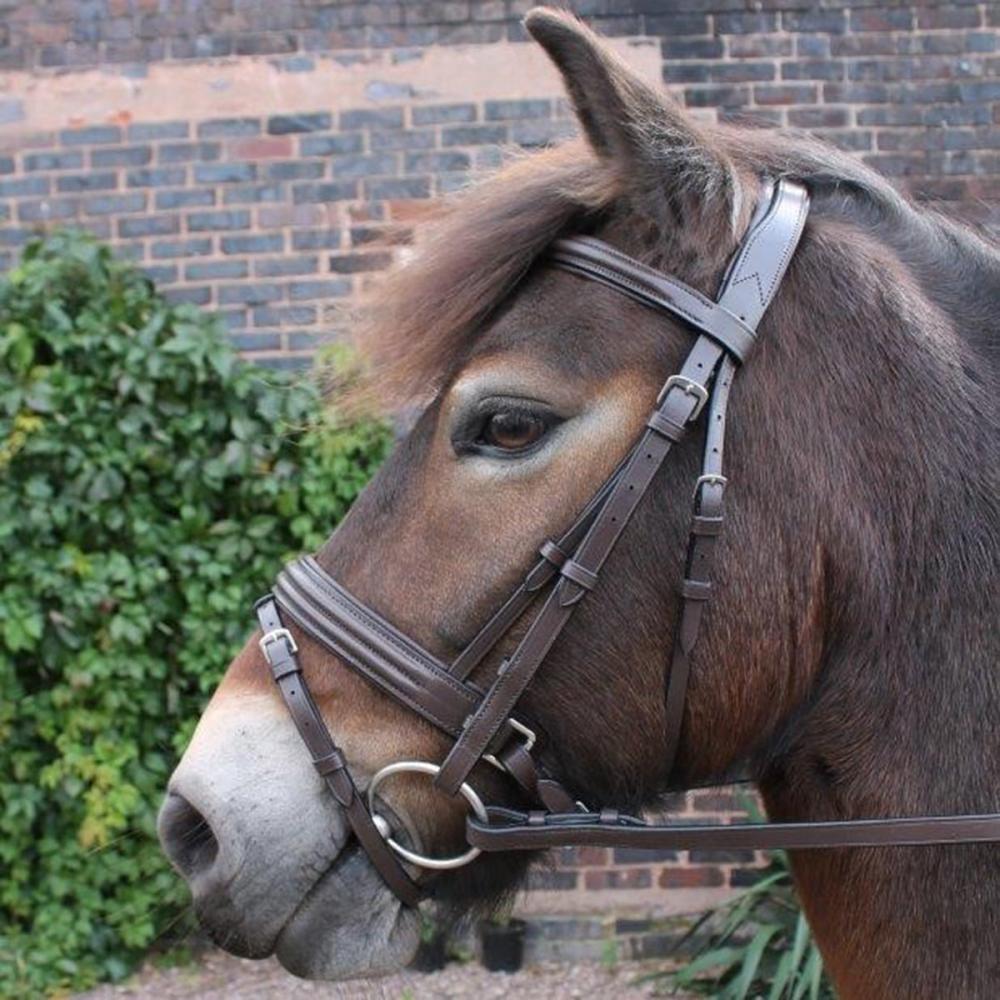 The Cavaletti Collection leatherwork range is designed with horse comfort at its centre. Headpieces are shaped to sit clear of the sensitive area behind the ears. Nosebands are available in a range of configurations, from a plain flat cavesson through to the padded fixed flash and the grackle, so you can choose what actually suits your horse rather than buying on looks alone.
The Build Your Own Bridle feature is particularly useful here. Rather than buying a complete set that suits you on four out of five components, you can configure each piece separately, headpiece, noseband, browband, cheek pieces and reins, in brown leather, to get something that genuinely fits your horse and your discipline. Browse the full range of bridles to see the options available.
Coat Colour as a Guide
As a general starting point, brown bridles tend to complement warmer coat colours: chestnuts, bays, duns, buckskins and dark palominos. On these horses, brown leather sits naturally and does not create a visual break at the head. On greys and very dark horses, both colours can work well depending on the shade and undertone.
If you are unsure, hold a piece of brown leather up to your horse's face in good light. It sounds basic, but it is the most honest way to check.
Caring for Brown Leather
Brown leather shows wear, oil and surface marks differently from black. It will lighten slightly in areas of contact if not kept clean, and it can dry out and crack if neglected. Regular oiling and conditioning keep the colour even and the leather supple. The Cavaletti Collection leather care products are designed for this, available in 400ml and a smaller travel size, so there is no excuse for catching it too late.
A well-maintained brown bridle genuinely looks better over time than a neglected one. It develops a patina that is hard to replicate and easy to ruin by ignoring it.
Ready to Find Your Brown Bridle?
If you are looking for a horse bridle for sale that suits your discipline and your horse's comfort, the Cavaletti Collection leatherwork range covers everything from full bridle sets to individual components you can mix and match. Whether you need a brown grackle bridle for cross-country, a padded headpiece for a sensitive horse, or a cavesson noseband for everyday schooling, the range is built with fit in mind.
You may also want to check that your saddle fits well alongside your new bridle. The saddle range includes the same 14-day trial principle, so you can ride in it before you commit.
If you would like guidance from someone who can see your horse in person, use the find a fitter tool to locate a Cavaletti-approved saddle fitter near you.
-
Brown Leather Bridles: Which Disciplines Suit Them Best?
 April 27, 2026
 -
How to Fit a Flash Noseband: The Welfare Checklist
 April 24, 2026
 -
Bridles, Nosebands and Bits: A Practical Guide for UK Riders
 April 22, 2026
 -
What to Look for in a Jump Saddle Pad
 April 21, 2026
 -
Do Saddle Pads Change How Your Saddle Fits? What Pony Owners Need to Know
 April 20, 2026