|


14 DAY FREE TRIAL
Try Before you buy

HAND QUALITY
Durable Leathers


HAND DESIGNED
By Horse Owners

INTERCHANGEABLE
Unique Gullet System
14 DAY FREE TRIAL
Try Before you buy
HAND QUALITY
Durable Leathers
HAND DESIGNED
By Horse Owners
UNIQUE INTERCHANGEABLE
Gullet System
Bridles, Nosebands and Bits: A Practical Guide for UK Riders
22
Apr
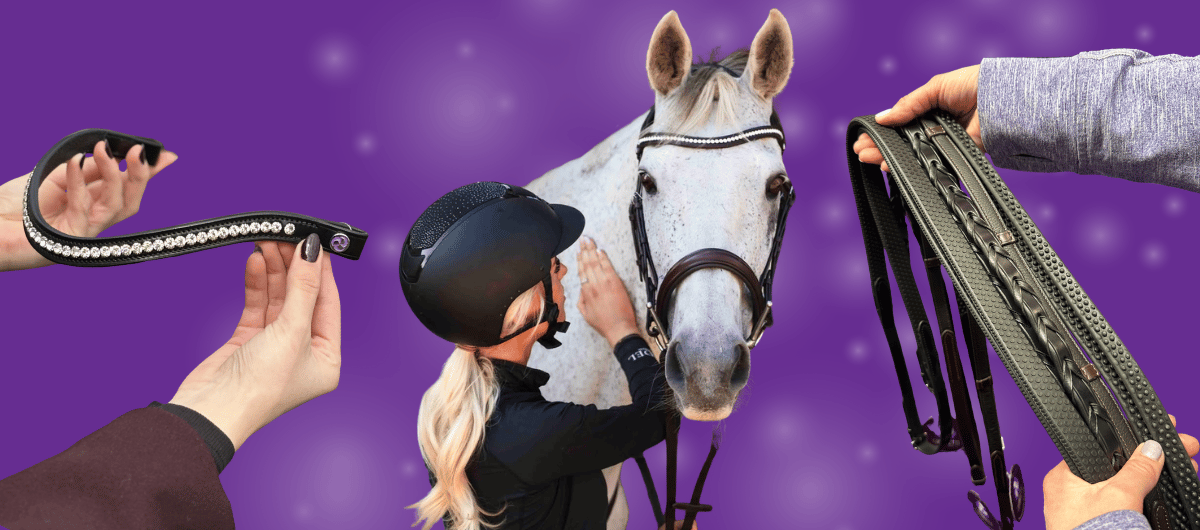
Bridles, Nosebands and Bits: A Practical Guide for UK Riders
Table of Contents
- Full bridle vs snaffle bridle: understanding the difference
- How to fit a flash noseband correctly
- Brown vs black leather bridles: does it matter?
- Full cheek bits: when and why to use one
- Bridle fit and horse comfort: what to check
- Putting it together
A bridle looks simple from the outside. In practice, getting the fit right across every component, the headpiece, noseband, bit and reins, is one of the things that most affects how a horse goes. A poorly fitted bridle creates pressure where there should be none, restricts movement in the jaw and poll, and can turn a willing horse reluctant.
This guide walks through the key bridle components and the decisions most riders face when buying or upgrading their tack. Whether you are putting together a first bridle for a young horse, considering a full bridle for dressage work, or simply trying to understand why your horse is fussing in the contact, there is something useful here.
Double bridle vs snaffle bridle: understanding the difference
 When riders talk about a "double bridle", they usually mean one of two things. In everyday speech, it often just means a complete bridle set, everything included. In dressage and showing circles, a double bridle has a specific technical meaning: a double bridle, fitted with both a bradoon (a small snaffle) and a curb bit, each carried on its own set of cheek pieces.
The double bridle is used at the higher levels of dressage, where the two bits work independently to give refined, nuanced aids. It requires a horse that is well established in its work and a rider confident enough to carry four reins without confusion. Fitted incorrectly, a full bridle creates more problems than it solves.
For most leisure riders, competitors working at lower levels, and anyone with a young horse, a snaffle bridle is the right choice. A quality snaffle setup, properly fitted with a comfortable headpiece and appropriate noseband, does everything the horse needs and asks nothing of the rider it cannot give.
If you are considering moving to a double bridle for affiliated dressage, speak to a trainer before buying. The investment makes sense once the horse is ready. Before that point, it does not.
How to fit a flash noseband correctly
The flash noseband is one of the most commonly used nosebands in the UK, particularly in dressage and jumping. It consists of a cavesson with a small strap attached at the front, which passes below the bit and fastens under the chin. The upper cavesson ring sits on the nose, the lower flash strap closes the mouth.
It is also one of the most commonly fitted incorrectly.
A flash nose band that is too tight prevents the horse from softening in the jaw, inhibits natural swallowing, and can cause tension in the poll and neck. A horse that looks consistently resistant, tight through the back, or unwilling to stretch forward into the contact may not have a training problem. It may have a noseband problem.
To check fit on a flash nose band:
- The upper cavesson should sit two fingers below the cheekbone. You should be able to slide two fingers under it comfortably.
- The flash strap should allow enough room to pass a thumb underneath without forcing. It should close the mouth, not clamp it.
- When the horse flexes and opens the jaw slightly, the noseband should move with it, not fight it.
If you are buying a flash nose band for the first time, check the quality of the stitching at the attachment point where the flash strap meets the cavesson. This is a stress point and a reliable indicator of overall construction quality.
The Cavaletti Collection leatherwork range includes several noseband options, including padded fixed flash and detachable flash designs.
Brown vs black leather bridles: does it matter?
 In practical terms, the colour of a brown bridle or black bridle makes no difference to the horse. The decision is almost entirely about aesthetics, convention and discipline.
Black leather bridles have long been the standard in dressage and showing. The contrast against a grey or dark horse looks formal and polished. At affiliated dressage competitions and in the show ring, black tack is the expected choice for most turnout.
A brown bridle suits a different context. Show jumping, hacking, general schooling and eventing have always been more relaxed about bridle colour. Brown leather bridle tends to look warmer and more natural against chestnuts, bays and warmbloods. Many riders simply prefer the look, particularly with a matching brown saddle.
There is no rule that says you must match your bridle colour to your saddle, though most people do. The more important consideration is leather quality and fit. A well-made brown bridle that fits your horse correctly will always outperform a poorly fitted black one.
One practical note: different leathers take different dyes and finishes. Some black bridles use a heavier, stiffer leather that requires more breaking in. Some brown bridles use softer Italian leathers that mould to the horse more quickly. When buying, ask about the leather source and preparation, not just the colour.
Full cheek bits: when and why to use one
A full cheek bit has extended cheek pieces that protrude above and below the bit ring on both sides. This design was originally developed as a lateral aid for steering, and it remains one of the most useful bits in the schooling toolkit for specific situations.
The extended cheeks press against the side of the horse's face when the rein is used, giving a clearer directional signal than a loose ring or eggbutt bit. This makes a full cheek bit particularly useful in a few specific situations:
- Young horses starting their education, where steering is still being established
- Horses that drift or fall out through the shoulder, particularly on turns and circles
- Lateral work, where a clear guide through the outside cheek helps the horse understand the direction of travel
- Riders with less established hands, where the cheek provides some additional guidance
A full cheek bit should be fitted with bit guards or, ideally, used with keepers, small loops on the cheek pieces of the bridle that hold the upper cheek in place. Without keepers, the bit can rotate and the cheek loses its steering effectiveness.
It is not a stronger bit in terms of pressure on the bars or tongue, and it should not be chosen as a control measure for a strong horse. If a horse is pulling or bolting, a full cheek bit is unlikely to help. That is a training question, not a tack question.
The full cheek bit can be used with either a plain snaffle bridle or as the bradoon in a double bridle setup, though this is unusual. Most commonly it is used as a single bit in a standard snaffle bridle.
Bridle fit and horse comfort: what to check
Bridle fit is checked less often than saddle fit, and the signs of a poorly fitted bridle are easy to miss. Horses rarely make it obvious. They tend to get a bit tight through the jaw, a bit reluctant to go forward, a bit fussy in the contact, and the rider assumes it is tension or resistance. Sometimes it is. Often it is not.
These are the main pressure points to check on any bridle:
- Headpiece and poll pressure. The headpiece sits directly behind the ears, over the poll, which is one of the most sensitive areas on the horse's head. A narrow, stiff headpiece concentrates pressure rather than distributing it. A padded, shaped headpiece sits wider across the poll and causes significantly less restriction. If your horse is head-shy, objects to bridling, or carries tension through the neck, this is the first thing to look at.
- Bit height. The bit should sit comfortably in the mouth with one to two wrinkles at the corner of the lips. Too low, and it clangs on the teeth and loses stability. Too high, and it pinches constantly. Bit height is adjusted through the cheek pieces of the bridle.
- Browband width. A browband that is too short pulls the headpiece forward and puts pressure on the ears. The horse often shows this by head-shaking or persistent ear flicking. The browband should sit level and flat, with a small amount of space at each end.
- Cheek piece length. If the cheek pieces are set very long, the bit hangs low and the noseband sits incorrectly relative to the bit. If they are very short, the headpiece is pulled down and the whole bridle is out of balance. Cheek piece adjustment affects everything else.
If you are unsure about bridle fit and how it might be affecting your horse's way of going, it is worth asking a qualified saddle fitter to look at the whole picture. Saddle and bridle fit interact, and a problem that looks like a training issue can sometimes be traced back to discomfort that is easy to fix. You can find an approved fitter near you.
Putting it together
The bridle is the primary communication tool between rider and horse. It sits on the most sensitive part of the body and carries the bit that the horse responds to every stride. Getting it right is not about spending the most money. It is about choosing components that actually fit the horse in front of you.
That is the thinking behind the Cavaletti Collection Build Your Own Bridle feature. Rather than buying a pre-assembled set that may or may not work for your horse's specific head shape and discipline, you choose each component separately. Headpiece, noseband, browband, cheek pieces, reins, all selected to match your horse rather than a generic template.
Browse the full range at Cavaletti Collection Horse Bridles, or explore the Saddle range if you are also thinking about saddle fit. If you have questions about fit or would like guidance on which components suit your horse, get in touch. We are happy to help.
Recent Posts
-
Weighted stirrups: do they actually help your position?
 September 4, 2026
 -
When to Replace Your Stirrup Leathers: The Warning Signs
 August 31, 2026
 -
Black vs Brown Reins: Does Matching Your Bridle Actually Matter?
 August 28, 2026
 -
How to Choose the Right Safety Stirrups for Jumping
 August 24, 2026
 -
Stirrups, Reins and Stirrup Leathers: Getting Your Leatherwork Right
 August 19, 2026