|


14 DAY FREE TRIAL
Try Before you buy

HAND QUALITY
Durable Leathers


HAND DESIGNED
By Horse Owners

INTERCHANGEABLE
Unique Gullet System
14 DAY FREE TRIAL
Try Before you buy
HAND QUALITY
Durable Leathers
HAND DESIGNED
By Horse Owners
UNIQUE INTERCHANGEABLE
Gullet System
Caring for Your Leather Headcollar: A Simple Routine
8
Jul

Caring for leather headcollar that is looked after properly can last for ten years or more. One that is put away wet, never cleaned, and occasionally oiled will crack and fail in a fraction of that time.
Good leather care is not complicated. It takes a few minutes per week, and the return on that small investment is tack that stays strong, comfortable, and safe.
After Every Use: The Quick Clean
Wipe the headcollar with a damp cloth after each use to remove mud, sweat, and grease. Sweat is particularly damaging to leather if left to dry in. It dries out the fibres and causes cracking along stress lines.
You do not need a full clean after every use. A damp cloth takes ninety seconds and removes the majority of what would otherwise dry into the leather overnight.
Allow the headcollar to dry naturally. Do not put it near a radiator, an Aga, or leave it in direct sunlight. Heat dries leather out faster than almost anything else.
Weekly: A Proper Clean
Once a week, or every few uses for heavy use, give the leather headcollar maintenance a proper clean. Use a damp cloth or sponge with a small amount of glycerine saddle soap. Work it into the leather with small circular movements and then wipe clean.
Pay attention to the inside of the noseband and headpiece, the areas that sit against the horse's skin. These areas collect the most sweat and grease and are where deterioration begins if cleaning leather tack is neglected.
Check the stitching at each buckle and ring attachment as you clean. These are the stress points. Any fraying, looseness, or cracking around a stitched area is a sign that area needs attention.
Monthly: Condition the Leather
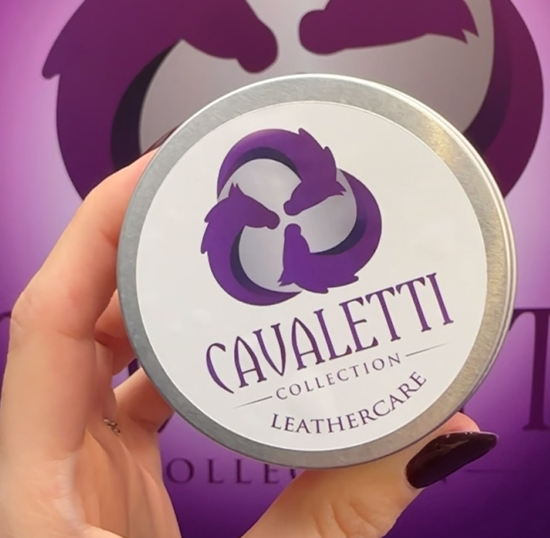
Once a month, or more frequently if the headcollar is used in wet conditions, apply a leather conditioner or oil. Cavaletti Collection's own-brand leather care routine product is a good choice for leather tack across the full range.
Apply conditioner to clean, dry leather. Work it in with a cloth or your fingers. Allow it to absorb. A little conditioner goes a long way. Applying too much, particularly oil, can soften the leather to the point where it loses structure.
The goal is leather that feels supple but firm. If the leather is stiff and dry, it needs conditioning. If it is very soft and floppy, it may have been over-conditioned.
Storage
Store leather headcollars hung on a hook, not folded or coiled. Folding leather repeatedly creates crease lines that eventually become cracks.
If the headcollar will not be used for an extended period, clean and condition it before storing, then keep it in a cool, dry place out of direct sunlight.
When to Replace
A leather headcollar that has cracked at a buckle hole or stress point, has visibly fraying stitching at a ring attachment, or has become so dry that it has lost flexibility in the noseband or headpiece, needs replacing. Good leather care extends the life of tack significantly, but no headcollar lasts forever.
Browse Cavaletti Collection's leather care range, including our 400ml and 60ml leather care products, at cavaletticollection.co.uk. And for a wider look at tack care and fitting, visit our fitting guide or use our fitter locator to find qualified help near you
Recent Posts
-
Weighted stirrups: do they actually help your position?
 September 4, 2026
 -
When to Replace Your Stirrup Leathers: The Warning Signs
 August 31, 2026
 -
Black vs Brown Reins: Does Matching Your Bridle Actually Matter?
 August 28, 2026
 -
How to Choose the Right Safety Stirrups for Jumping
 August 24, 2026
 -
Stirrups, Reins and Stirrup Leathers: Getting Your Leatherwork Right
 August 19, 2026