|


14 DAY FREE TRIAL
Try Before you buy

HAND QUALITY
Durable Leathers


HAND DESIGNED
By Horse Owners

INTERCHANGEABLE
Unique Gullet System
14 DAY FREE TRIAL
Try Before you buy
HAND QUALITY
Durable Leathers
HAND DESIGNED
By Horse Owners
UNIQUE INTERCHANGEABLE
Gullet System
Why Leather Headcollars Are Safer Than You Might Think
1
Jul

Why Leather Headcollars Are Safer Than You Might Think
At first glance, a leather headcollar seems like the more fragile choice. It can break. A synthetic one won't. Surely that makes the synthetic safer?
The opposite is often true. And once you understand why, it changes how you think about what goes on your horse's head.
The Scenario Nobody Wants to Think About
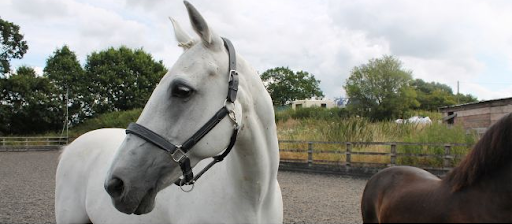
A horse left in a headcollar, in the field or the stable, gets the headcollar caught on something. A fence post. A stable bolt. A field shelter fitting. A gate latch. It does not matter what. The horse panics and pulls.
With a synthetic headcollar, something has to give. That something will be the horse's neck, the fence, or the fitting. None of those outcomes is good.
With a leather headcollar, the leather gives. The horse breaks free. The headcollar needs replacing. That is an infinitely better outcome.
This is not a hypothetical. Horses get caught. It happens on well-managed yards with careful owners. The headcollar material determines what happens next.
Which Horses Most Need a Leather Headcollar?
Any horse left unattended in a headcollar. This includes horses in the field, horses travelling (depending on how they are secured), and horses left in stables while still headcollared.
Young horses or horses that panic easily. A young horse that has not yet learned to stand quietly when tied is exactly the horse that is most likely to pull back sharply. Leather gives a margin of headcollar safety that synthetic does not.
Horses with a history of pulling back. See our dedicated guide for more on this specific situation.
The Durability Question
The valid concern about leather headcollars is that they can break when you do not want them to. A poorly maintained leather headcollar, dry and cracked, may break at an inconvenient moment. A correctly maintained one should only break under genuinely significant force.
Regular conditioning keeps leather supple and strong. A leather headcollar that is cleaned and conditioned regularly will outlast many synthetic alternatives, and when it does break under pressure, it will break cleanly at a stress point rather than fraying over time.
The headcollar safety property of leather depends on the leather being in good condition. Neglected leather is less reliable. This is one more reason maintenance matters.
Leather and Skin Comfort
Supple leather is softer against the skin than synthetic webbing. For horses who wear a headcollar for long periods, for horses who are sensitive around the head, or for horses whose faces are prone to rubs, well-conditioned leather is the kinder option.
A headcollar that sits against the skin comfortably for hours is less likely to cause rubs than one that stiffens in wet conditions and chafes.
Browse the Cavaletti Collection leather headcollar range, or use our fitting guide to check your current tack setup. And if it is time to look at the saddle as well, the 14-day saddle trial is always worth knowing about.
Recent Posts
-
Weighted stirrups: do they actually help your position?
 September 4, 2026
 -
When to Replace Your Stirrup Leathers: The Warning Signs
 August 31, 2026
 -
Black vs Brown Reins: Does Matching Your Bridle Actually Matter?
 August 28, 2026
 -
How to Choose the Right Safety Stirrups for Jumping
 August 24, 2026
 -
Stirrups, Reins and Stirrup Leathers: Getting Your Leatherwork Right
 August 19, 2026