|


14 DAY FREE TRIAL
Try Before you buy

HAND QUALITY
Durable Leathers


HAND DESIGNED
By Horse Owners

INTERCHANGEABLE
Unique Gullet System
14 DAY FREE TRIAL
Try Before you buy
HAND QUALITY
Durable Leathers
HAND DESIGNED
By Horse Owners
UNIQUE INTERCHANGEABLE
Gullet System
What Happens After Your 14-Day Saddle Trial? Returns, Adjustments and Next Steps
20
Mar
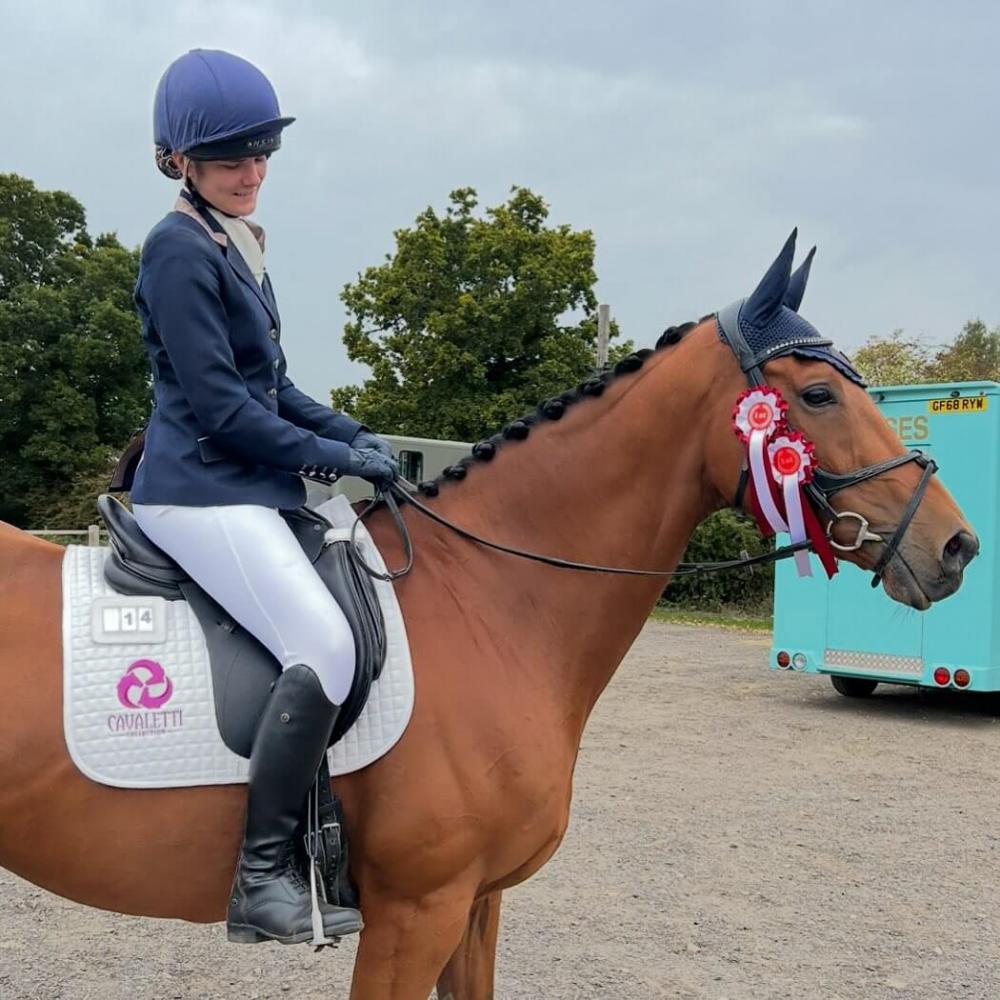
Image Credit: @team_allerton
What Happens After Your 14-Day Saddle Trial? Returns, Adjustments and Next Steps
Table of Contents
- The day the trial ends: what you’re probably feeling
- A quick recap: how the trial works
- Before you decide: the kind check-in ride
- Option 1: Keeping the saddle (and booking support)
- Option 2: Adjustments—when “nearly right” is actually good news
- Option 3: Returns—how to do it smoothly and kindly
- Care tips during and after the trial
- Girth comfort matters: how to measure girth
- Small acts of kindness that make trials better for everyone
- Your next steps checklist
There’s something quietly brave about opening the box at the end of a long day, lifting out a saddle, and realising: this could change everything for us. Not in a dramatic, movie-moment way. More in the small, steady way that good tack does—helping your horse lift through the back, helping you sit without fighting, helping both of you finish a ride feeling calmer than when you started.
A 14-day saddle trial is a promise you make to your horse: “I’m going to do this properly.” And once those 14 days are up, you’re not left on your own. Whether you’re ready to keep the saddle, need an adjustment, or decide it’s not the one, the “after” part is where responsible ownership really shines.
If you found yourself searching saddle fitters near me before the trial (or during it, let’s be honest), this guide is your friendly next step.
The day the trial ends: what you’re probably feeling
Most riders hit one of these feelings around day 12:
- “This is the one, I don’t want to send it back.”
- “It’s close… but something isn’t quite settled.”
- “My horse is telling me ‘no’, and I need to listen.”
All of these are responsible outcomes. A trial isn’t a test you “pass” or “fail”—it’s a conversation with your horse. And if you’ve been looking up saddle fitters near me to make sure you’re doing it right, you’re already doing the kindest thing: taking fit seriously.
A quick recap: how the trial works
Even if you’ve lived it for two weeks, it helps to zoom out. The simplest version of how the trial works is:

- You choose a saddle you’d like to try (often after guidance).
- It arrives and you ride in it across normal days—schooling, hacks, maybe a lesson—because real life is the point.
- You watch your horse’s comfort and your own position, then decide: keep, adjust, or return.
- If you need support, you book help (and yes, many people still search saddle fitters near me at this stage too).
If you’re new to the process or want the full step-by-step in Cavaletti’s own style, link back to the main guide here: How to Book a FREE Saddle Trial for 14 Days.
Image Credit: @harrys_newchapter
Before you decide: the kind check-in ride
Before you pack anything up or hit “buy,” give yourself one last thoughtful ride.
Pick a “normal” session—not the day your horse is fresh as fireworks, and not the day after three days off. Warm up like you always do, then ask three questions:
- Does your horse feel more willing?
Look for softer transitions, easier bending, and a back that feels like it’s swinging instead of bracing. - Do you feel more balanced without forcing it?
The best saddles don’t make you work harder to sit. They quietly put you in the right place. - Are there any new rubs or sensitivity?
Check the girth area, withers, and along the back after riding.
If you’re unsure, this is the moment many riders go back to searching saddle fitters near me—and honestly, that’s a smart move. Fit can change with flocking, pads, girths, and even your horse’s condition over two weeks.
Option 1: Keeping the saddle (and booking support)
When it’s right, you’ll know. Your horse’s “yes” is usually obvious: longer stride, steadier contact, fewer evasions, more relaxation.
If you’re keeping the saddle, your next step is to make sure you’re set up for long-term comfort:
- Double-check girth choice and length
- Confirm pad thickness isn’t changing the fit
- Plan a follow-up once the saddle has “settled” a little through use
This is also a perfect time to browse the saddle options and categories (especially if you’re comparing styles or sizes).
And if you’re still weighing up alternatives, you can explore second-hand saddles and available options.
Option 2: Adjustments—when “nearly right” is actually good news
“Nearly right” is not a disappointment. It’s information.
Sometimes the shape is correct, but the balance needs refining. Sometimes you love how your horse goes, but your leg feels pushed too far back. Sometimes flocking changes everything.
Common reasons you might want an adjustment after the trial:
- The saddle feels slightly high at the back or front
- Your horse is happy in walk/hack mode but tight in canter work
- You feel tipped forward or struggling to keep your leg under you
- You’re seeing minor rubs that weren’t there at day 1
This is where professional guidance matters. If you’ve been Googling saddle fitters near me, use that energy wisely: book support early so small issues don’t become long-term discomfort.
And if you want to start again with a different saddle choice (still within a helpful, guided process), head back to the main guide: How to Book a FREE Saddle Trial for 14 Days.
Option 3: Returns—how to do it smoothly and kindly
Returning a saddle can feel oddly emotional, especially if you wanted it to work. But returning the wrong saddle is one of the most responsible things you can do.
A few things make returns smoother for everyone (and help the next horse too):
- Clean it gently and pack it securely
- Include any accessories exactly as received
- Don’t delay—stick to your trial window
- Let the team know what didn’t feel right (this helps choose the next one)
It’s a small act of kindness to give clear feedback. “Horse felt tight in the shoulder” or “I felt tipped forward” is genuinely useful—and it speeds up finding a better match.
Care tips during and after the trial
This is the part too many people skip, but it matters. Good care of the saddle protects the leather, keeps the saddle trial-ready for other riders, and helps you see fit more clearly (because grime, stiff billets, and slipping pads confuse everything).
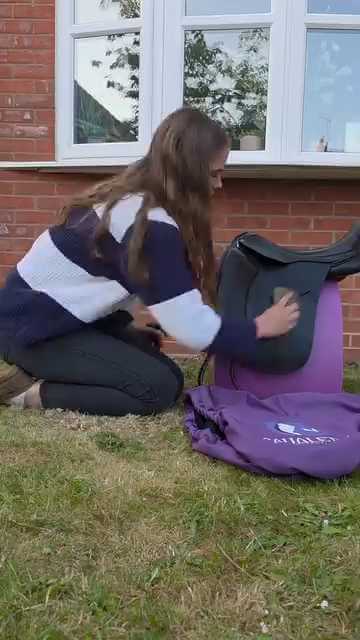
Here’s a simple routine:
- Wipe down after every ride (especially sweat marks)
- Condition lightly if the leather feels dry
- Keep it stored on a proper saddle rack
- Avoid leaving it in damp tack rooms or hot cars
During the trial, consistent care of the saddle also shows you what the saddle looks like “normally” on your horse—so if something changes (rub marks, movement, uneven sweat), you’ll spot it faster.
And yes: care of the saddle is also community care. Trials work because everyone treats the saddle like it matters.
Image Credit: @harrys_newchapter
Girth comfort matters: how to measure girth
A saddle can be great and still feel wrong if the girth situation isn’t right. Too long, too short, buckles sitting in the wrong place—your horse will tell you.
A quick guide on how to measure girth:
- Saddle up with your usual pad.
- Fasten the girth to the first holes you normally use.
- Check where the buckles sit—ideally away from the elbow and not right on top of it.
- Measure end-to-end (from buckle to buckle) on the girth that sits correctly.
- If you’re between sizes, consider your billet length and where you want the buckles to land.
If you’ve been uncertain and searching saddle fitters near me, this is one of those practical details they’ll often correct in minutes.
And because riders ask this all the time: how to measure girth is not about “tightness.” It’s about placement and comfort. Snug enough to be safe, kind enough to let your horse breathe and move.
(One more time for the people in the back: how to measure girth properly can genuinely change your whole saddle experience.)
Small acts of kindness that make trials better for everyone
A trial is a shared system built on trust. And the horse community gets better when we do the little things:
- Be honest about the fit. Returning a saddle that isn’t right helps your horse and helps the next rider.
- Keep it clean. Thoughtful care of the saddle means the next trial starts on a good note.
- Share useful feedback. “Felt stable but slightly downhill” is gold.
- Don’t force the ‘yes’. If your horse says no, listen.
It’s easy to think “one trial doesn’t matter,” but it does. It’s how a lot of horses end up moving better without anyone ever making a fuss about it.
Your next steps checklist
If your 14 days are ending (or you’re already there), here’s your simple plan:
- ✅ Do one last normal ride and check comfort
- ✅ Check for any rubs and reassess pad + girth
- ✅ Confirm how the trial works for returns/next steps via the main guide:
How to Book a FREE Saddle Trial for 14 Days - ✅ Decide: keep, adjust, or return
- ✅ If needed, search and book saddle fitters near me so you can make the best call
- ✅ Browse saddle options/categories
- ✅ If you’re ready to begin a trial, go Here.
If you’re still in research mode, explore the range of used saddles here.
Ready to buy, or want to try first?
Book your FREE 14-day saddle trial.
Recent Posts
-
Weighted stirrups: do they actually help your position?
 September 4, 2026
 -
When to Replace Your Stirrup Leathers: The Warning Signs
 August 31, 2026
 -
Black vs Brown Reins: Does Matching Your Bridle Actually Matter?
 August 28, 2026
 -
How to Choose the Right Safety Stirrups for Jumping
 August 24, 2026
 -
Stirrups, Reins and Stirrup Leathers: Getting Your Leatherwork Right
 August 19, 2026